
I’ve already run interviews with True’s contributors Jennifer Weiner and Mike Straw. I finally got my newest contributor, Alexander Cohen, to take time from has day job and his True sideline work to answer some questions — just in time to get some feedback from him about two stories he wrote that promise to be …controversial. Let’s start with those two stories, from True’s 11 September 2011 issue.
Would You Shoot a Bully?
“It was beyond ‘your clothes are ugly’ or ‘you don’t have any brand clothes’ or ‘you are ugly, your hair is not right.’ It was vicious,” says Jennifer McKendrick. She was describing comments she found on a public Facebook page, and she recognized the speakers: McKendrick is a self-employed photographer, and she had contracted to take their high-school senior pictures. So she sent back their deposits — and sent their parents screen shots of the Facebook page; a couple of parents said they would “take care of it,” McKendrick said. The southwestern Pennsylvania photographer explained that the students were not “the type of client I want to represent my business.” (AC/WTAE-TV) …Which is the bigger bullying move: Posting insults on a Facebook page the subject never has to visit, or tattling to the person who has control over nearly every aspect of your victim’s life?
and…
Shooting People Is Still Illegal
Opponents of a new Virginia law allowing concealed-carry permit holders to carry guns into bars and restaurants that serve alcohol warned that the bill would bring about a booze-fueled “blood bath,” recalls Philip Van Cleave, president of a gun-rights organization. But now that the law has been in effect for a year, Van Cleave wants an apology: What’s actually gone down at the Commonwealth’s bars and restaurants is the rate of major gun-related crimes — by 5.2 percent. While the law is still controversial, there is no restriction in Virginia against people who carry weapons openly (vs. concealed weapons with permits) from drinking alcohol. (AC/Richmond Times-Dispatch) …Now that bars are safer, how about making Virginia’s college campuses safer?
I think Alexander likes to turn around True’s mission — to entertain …and provoke thought.
The Interview: Alexander Cohen
Randy Cassingham: When I sent you the Virginia “blood bath in bars” story to write, I suggested “can you do it in such a way that it doesn’t seem like you’re taking sides too much?” I sent you this for one example (but noted it still got lots of feedback!) and this for another. My general idea is to illuminate topics so people will think about them, rather than stomp away mad (which pretty much guarantees they won’t think about them). You apparently had a different idea.
Alexander Cohen: Actually, I thought it might make people think — but perhaps not the same people you had in mind. Even in relatively pro-gun states such as Virginia, colleges often forbid their students to carry guns — which suggests that some people who are willing to accept that bar patrons ought to be free to be armed, aren’t willing to acknowledge that college students have the same right. Yet we’ve had a series of large-scale school shootings in this country, including one in Virginia, and it seems to me that having guns in the hands of those students who aren’t angry and miserable enough to kill others and then themselves would make such shootings less successful.
RC: You of course knew that would be controversial: it was quite the debate after the 2007 Virginia Tech shootings, after all.
AC: Indeed. And yet Virginia, several of whose universities place remarkable confidence in their students in other ways, did not uphold the right to carry on campus.
RC: So I presume that after Columbine, Virginia Tech, and heck even 9/11, you agree with the security consultant I quoted in my Virginia Tech blog entry, who said that “cowering under a desk and waiting for help to come is no longer an option. American schools must teach their students to respond aggressively to attacks by people bent on mayhem.” How do you teach that without the significant risk that a student will pull a gun when frustrated with a teacher?
AC: Most people, even when angry, are rational enough to understand that pulling a gun without clear justification is a very bad idea. I’ve dealt with angry and disappointed students as an adjunct and a TA, and I don’t think there are a lot of students out there eager to go to prison over a B–. Why do you think there’s a significant risk they will?
RC: Just because the odds are good. Presumably, by requiring permits (which almost always are proceeded by a background check and required training), most of the more unstable types would be weeded out, but sometimes people do get unreasonably angry and don’t think about the consequences of their actions. That is, in part, what True is about, eh?
AC: Sure there’s a risk — there’s always a risk. The question is whether there’s a significant risk — which in context, I took to mean a risk substantially greater than in the general run of human interactions.
Also, I don’t believe students should be required to get permits in order to carry guns openly.
RC: Of course, the odds are bad, too — odds are, the next big shooting is pending. I know if I was there, I would want a gun to fight back. I can’t argue effectively that I should have that right, and others should not.
AC: Which gets to one of the main reasons it’s important to defend other people’s rights: If a principle of rights isn’t upheld in every case, it’s harder to defend it in any case. By defending the rights of others, you defend your own. (It’s also important because rights protect people’s ability to flourish, and we often benefit from one another’s flourishing.)
RC: I assume you agree that Jennifer McKendrick, the freelance school photographer, should have the absolute right to do business — or refuse to do business — with whomever she chooses. What do you think she should have done when she saw what she considered reprehensible conduct by her clients? Surely those parents would want to know why she was returning the deposits paid for those senior portraits.
AC: Certainly people have a right to refuse to do business with anyone they wish — although I’ll point out that McKendrick had already agreed to do business with these people and had accepted deposits and scheduled appointments, so there’s an issue of contract there. As to whether, setting aside the contract issue, she was justified in refusing (and not everything that’s within your rights is the right thing to do), I think refusal to do routine business with someone because of unrelated conduct should be reserved for truly extreme cases — but there’s an argument to be made that given the nature of McKendrick’s work, her knowledge of her subjects’ character is relevant.
Adults often forget that teenagers live in near-dictatorships, with their liberty, property, and even bodily autonomy under the control of other people — people whose goals in the use of such power are often contrary to the teenagers’ own values. Granted, some parents do struggle to behave decently despite having such power, but when you tell a parent his daughter has done something of which he likely wouldn’t approve, you have no way of limiting the consequences. So McKendrick, unless she knew these families very well, exposed these young women to substantial risk.
Should that be a crime? No. But I disapprove of it a lot more strongly than I disapprove of making insulting comments on Facebook. And if I were a young person in southwestern Pennsylvania, I’d refuse to be photographed by McKendrick, because she has proved that young clients cannot trust her not to expose them to unnecessary risks. (Though I should acknowledge in mitigation that she has chosen not to reveal the individuals’ names.)
You asked what she should have done. If she was justified, as she may or may not have been, in refusing to proceed with the shoots she had scheduled, she should have said that while she had seen an ugly side of the girls’ character, it was not her place to get into the matter any further.
RC: Let’s switch to more general questions. You’re trained as a lawyer, but didn’t practice as an attorney. Did you intend to, and then change your mind? Or was your law degree part of a bigger idea?
AC: I never intended to make a career of it.
RC: Then you went on to study philosophy in grad school. Why? What’s the ultimate goal?
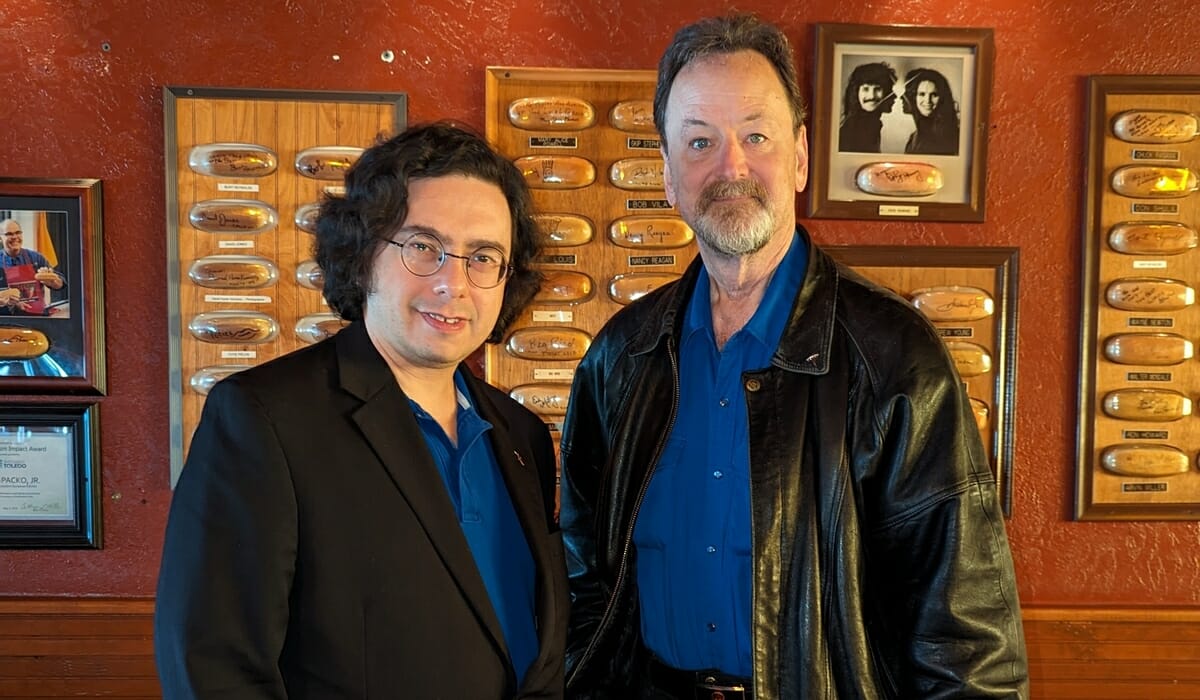
AC: I call myself a “philosopher-journalist.” With one eye, I look into the most important questions: What is it to be a good human being? How does one achieve happiness? How can political society and other associations and relationships contribute? As Aristotle said, ethics is not like other inquiries, because its goal is “not to understand what virtue is, but to become good”; I was drawn to the study of philosophy for guidance for my own life, and as a professional matter, I’m interested in working towards a political society where people are free to flourish — and a culture where they actually do. So with the other eye, I look toward concrete facts, and try to see — and show — how the relevant moral and political principles apply. Or if it’s not clear to me, or I don’t have the space to make it clear to my reader, I try to find the right direction to inquire, and show that.
RC: Meanwhile, you’re very active with the philosophy of Objectivism — what Ayn Rand introduced to the world with her writings, including the novels The Fountainhead and Atlas Shrugged — and your day job is Managing Editor of the Business Rights Center of The Atlas Society. What do you find attractive about Rand’s ideas?
AC: Rand recognized a wide range of fundamental truths about man and his world. For example, she identified the fundamental basis of morality by asking why we need ethics. She provided rationally defended virtues, and showed thereby that virtue pays.
But one of the things that caught me before I began to study philosophy in depth was that she explained the significance of something I had always felt: that the skyline of New York City, where I grew up, was more beautiful than any forest or mountain. I love the beauty of human ambition and achievement — and Objectivism is the philosophy that embraces those values.
RC: What is the Business Rights Center?
AC: Human life is sustained by production, and being productive is, therefore, an important virtue. But all too often, people who try to be productive find the government in their way — sometimes even trying to put them in prison for their acts of production and trade. See, for example, the prosecution of people who buy and sell stock based on “nonpublic information” — information they know, that the public doesn’t know and has no right to know. Knowledge should guide action — but the securities laws say, if you have this knowledge, and you gained it in certain (often perfectly legitimate) ways, you’re not allowed to act on it by taking what would otherwise be the perfectly legal actions of buying and selling stock.
The Atlas Society’s Business Rights Center defends, through advocacy, the freedom of production and trade.
RC: What does the “Managing Editor” job entail?
AC: I write for the blog and run the Twitter feed, @bizrights, which has lots of news and commentary on the right to be productive and attacks on that right.
RC: How long have you been reading True, and do you remember how you heard of it?
AC: I’d have to dig around in email archives I can’t access now to answer, but I think I got my first free subscription sometime in the 90s. I know that by 2002, I was reading True’s spinoff HeroicStories, which I found out about from True — I know, because the week of Sept. 11, 2002, HeroicStories ran my piece “Greeting Ground Zero”.
RC: It was a good piece. What’s your favorite kind of True story?
AC: Depends on the day: either the kind I’m writing, or the kind I’ve already written.
RC: Heh! And your least favorite?
AC: The kind where someone else wrote it and didn’t get the moral question right.
RC: Intriguing. To be sure, not all of the stories are meant to have a moral question, or even to provoke deep thought; sometimes, entertainment is enough.
AC: Indeed. And I enjoy both reading and writing stories that are just funny. Of course, sometimes, either because of my unconventional views or just because I’m a philosopher, I see moral questions where others might not.
RC: Which is why I thought maybe you like to reverse True’s mission of “entertain …and provoke thought.” How will writing for True fit in to your long-term plans, a Ph.D. in philosophy, and everything else you’re working on?
AC: I’ve got a full-time job and a dissertation to write, so I think it’ll fit by means of a shoehorn.
RC: I’ve noticed that you often take an unconventional view of stories that involve teenagers. Why?
AC: I believe that what rights a person has do not depend on how many times he has orbited the sun. Nor is one person entitled to greater respect than another because he’s been around longer. Young people who have the capacity for reason, like the rest of us, have the right to identify and pursue their values; they have the same right — and the same need — to think independently and to act on their independent judgment. The conventional view of many issues involving young people fails to take their liberty and dignity seriously. Moreover, the conventional view tends to trust parents and see nothing wrong with their vast powers over their children’s lives, but once you see those children as people with rights and values that ought to be taken as seriously as their elders’, parental actions that win applause from adults often look rather more dangerous — and likewise actions involving parents.
RC: You do have a qualifier in there: “…who have the capacity for reason.” While I pretty much agree with you — that is, after all, a lot of what’s behind my “zero tolerance” series (that kids, including young ones, often have their rights trampled upon in egregious and indefensible ways), sometimes adults do have to step in and make decisions for kids since kids don’t always appreciate the ramifications of their actions. How does that fit in?
AC: It doesn’t. Merely because the adult thinks the minor hasn’t weighed all the ramifications of his actions isn’t justification to intervene, except when it would also be appropriate among adults. (If I’m about to step into traffic because I’m so focused on my smartphone that I don’t realize there are cars coming, please stop me — and if I were 13 instead of 33, that wouldn’t affect the issue.) When I say, “who have the capacity for reason,” I mean: who are able to think in concepts and principles. Put it this way, as a rule of thumb: Anyone who can argue about rights has them.
I actually got to combine my interest in youth rights with my interest in Objectivism this summer, when I gave a talk at The Atlas Society’s Summer Seminar in which I laid out two Objectivist arguments for youth rights. I think I got some people to rethink their views — but some people were quite clearly unconvinced.
By the way, for more information on youth rights you can visit the National Youth Rights Association. It’s an interesting group of people, diverse philosophically, politically, and — of course! — in age.
RC: Well, this has certainly met my goal: plenty to think about here!
Update
These days, Alexander is a freelance editor, and blogs at his site ARClights.
I must disagree with Mr Cohen about his reaction to the photographer, specifically assuming the 4 girls were “victims”. They deliberately wrote nasty things on Facebook about another girl.
The understanding I have is that the target girl would see the page, or her friends would and tell her. The point being: the target would get the messages.
I, as a parent, would want to know if my child (whom I am legally responsible for) was engaged in bullying. I think what the photographer did was quite appropriate, and provided proof of her actions and decisions.
Very simple rule: bullying in any form is unacceptable. This includes ZT by adults.
—
I’ll be happy to post any responses by Alexander, but they’ll necessarily be delayed. In the meantime, I believe his point is that the bullies victimized one person, and the bullies are being “victimized” by the photographer with her vigilante action. -rc
AC replies: “I, as a parent, would want to know” — exactly. You as a parent would want to know, presumably so that you could do something about it. Now, perhaps you’d simply sit down and have a conversation, which would be good. But many parents would do a lot more than that: They would punish their children in ways that violate their rights and, potentially, threaten everything they value. So a parent’s desire to know can’t be assumed to be benign unless you know the parent.
Just a quick question for Alexander…why shouldn’t those kid’s parents have been made aware of what their children were posting online? If it was on a public Facebook page, it doesn’t seem the kids had any fear of everyone reading their comments. So the photographer wasn’t exposing them to risk; they had already done that for themselves.
And, as an example of parents not having justification to intervene, you really believe that a 14 or 15 year old girl sending naked pictures to her boyfriend really appreciates the potential consequences of her actions?
I believe kids have rights but it seems you are saying parents have no right to interfere with their children’s decisions, even if they are detrimental.
—
Alexander replies: You do have a good point that if the photographer could see the comments, so could the parents, although taking a screenshot foreclosed the possibility of deleting the comments on recognition of the risk. That said, the photographer clearly raised the odds that the parents would see the comments.
As for the teenager sending nude pictures, the biggest risks involved in that come from the obscene way the child-porn laws — which are supposedly constitutional because they protect children from being abused in the act of making porn — have been applied to prosecute teenagers for engaging in self-expression. That said, the risks are there, and sending such pictures is probably usually a mistake. But the certain harm of lacking freedom is worse than the potential harm of making a mistake. And it’s not much of an argument to say that we should impose oppressive laws on people because they disobey the oppressive laws we have imposed on them — let alone because other people their age have.
I don’t see why the girls have any more right to expect things they post on Facebook to not have real-world consequences than anybody else. We’ve all heard about college age people learning that posting certain things might hinder their getting a job, or have a negative impact on their current one, if someone happens to see it and mention it to the wrong person. People might not want to do business with you, people in positions of power over you might punish you. How long should we insulate children from the consequences of their actions, particularly ones that harm others? From knowing that when they do something in public, people might see them, and therefore, they might get caught?
—
Alexander replies: I’m not saying people should be insulated from the consequences of their actions. But whatever happened as a result of the parents reading these comments wasn’t just a consequence of the teenagers’ actions, it was an effect of the photographer’s actions too, at least if the parents would not have found out otherwise.
That said, I do agree that people should think about what they post publicly — although too much caution in this regard can easily become cowardice. And if someone had said to these girls, “What if your parents find out?” that person would have been doing them a service.
Mr. Cohen’s beliefs and ideals are not unlike my own — when I was 33 years old. It will be very interesting to see if his convictions remain so well defined when he achieves, say, 60….
—
Alexander replies: I actually laughed out loud when I read this — it’s been a while since someone who knew my age told me when I was older I’d understand! So although, if I were younger, I’d be offended — this sort of remark disparages the target’s power of reason, which is the essence of his humanity, in order to allow the speaker to assure himself of his superiority and correctness without requiring him to examine the basis of his opinion — I’m too amused to work up an outrage. I hope you live to be 120, and I hope that’s long enough for you to see the error of your ways.
I just want to state that I fully support the photographer; it is so often the case that “it’s none of my business”, leaving a situation unpublished and under-appreciated or completely ignored, allowing those perpetrating the negative behavior to believe that they are not doing anything wrong.
Shame on anyone who believes that they don’t need to stand up for high standards and morals! Shame on those who turn a blind eye because it’s none of their business!
The truth is that we all have a moral obligation to eliminate negativity everywhere we go and in everything we do. To do less is to be less than human.
—
Alexander replies: I absolutely agree that we ought to stand up for what’s right. But we can’t have “a moral obligation to eliminate negativity everywhere we go,” because that would be an unlimited claim on our finite resources, because it would consume our own potential happiness, and because it simply can’t be achieved without violating other people’s rights. Would you kill people who refuse to stop making nasty comments?
When you see people saying cruel things without justification, you certainly should express your disapproval. I’d love to see school communities work at establishing a culture where this sort of conduct reduces the social standing of those who engage in it rather than those who are targeted. And individuals, especially when it requires going against the cultural grain, should make clear that such speech reflects far worse on the one who utters it than on the one of whom it is uttered. (I can’t resist quoting Harry Potter for an example: “I think I can tell the wrong sort for myself, thanks.”) But there are limits to what it is praiseworthy to do in response to a given blameworthy act. Where the act is mere unpleasant speech, throwing the security of a person’s body, liberty and property into jeopardy is an excessive response. And that’s what telling a parent does.
I disagree that the photographer should be considered a “bully”. If that were true, then anyone who reports a crime in progress is a bully. If I see kids robbing a store and call police (who then notify the dictatorial parents), am I a bully? What if a group of teens is physically beating a smaller teen; am I a bully for notifying the authorities or their parents? Physical beating is only about a half a step above bullying, which is essentially mental abuse.
The author calls parents “dictators”. I agree, and I think there are good reasons for this. My 6-year old doesn’t have the experience or wisdom to make major decisions, so I make them for him and “force” him to comply. He goes to bed at bedtime instead of staying up until midnight watching “Phineas and Ferb”, and he exercises by playing outside instead of spending all day playing video games. When he’s older he’ll do his homework before playing during the week. From the little I learned about the teens in this story, it sounds like they still need someone to make decisions for them because obviously they aren’t fully mentally developed.
As for the statement that the victim never needs see the Facebook page, that’s not true. When someone updates their status or posts to their FB wall that post is broadcast to everyone in the poster’s friend list. If the victim is a FB “friend” they will see the post. If not, everyone the poster knew will see it and pass it on. Is it considered bullying if you spread a vicious rumor about someone, but no one ever tells the victim that they are under attack?
As for the other topic, I thought the “campus” tagline was amusing and pointed, both good qualities in a TisT tagline. But although I’m a firm believer in the right to bear arms and defend oneself, I’d have to think long and hard before allowing open carry by students on campus. I agree that MOST people that age are fully functional adults who can make rational decisions, but I’ve also seen some rather emotional and violent displays over grades, political differences, and romantic entanglements. Thinking back, if my classmates were armed I can think of several occasions where an otherwise rational student would have probably fired a weapon in a fit on anger. Like the time the guy found out that he was finally and permanently flunking out; he was NOT thinking rationally. In reality he only threw a stapler through a window and knocked a door down on his way out of the offices; if he had possessed a gun, he would have spent the rest of his life in jail.
—
Alexander replies: It’s morally proper to use force to protect against force, so no, it’s not bullying to call the police about a robbery.
How do you know they’re “not fully mentally developed,” except that they did something of which you (rightly) disapprove? Should all the idiots who get covered in TRUE — most of whom are over 18 — have their lives run for them?
Who sees what on Facebook is complicated. If these individuals were Facebook friends with their victims, then yes, their victims would probably see what they wrote. But it is possible to defriend people, and it is possible (I’m told) to stay off Facebook.
I’m confused. Is it bullying to expect someone to realize their behavior may have consequences? Assuming you are protecting the bully from “unnecessary risk” at the parents’ hands is a rather wild assumption. By not telling, you are arguably failing to protect multiple other of the bully’s victims from present and future unnecessary risk.
So Alexander believes that subjecting children to parental discipline puts them at “substantial risk”? And he believes that people are somehow less victimized because they aren’t forced to read the insults that a bully directs toward them? Sheesh…I’m afraid Mr. Cohen is not the sharpest arrow in your quiver, Randy. But we can be grateful for at least one thing: He chose to stay away from practicing law.
I think I’m going to enjoy reading Alexander’s contributions even if I disagree with them — at least they’ll make me think! (BTW, I think the photographer should have talked to the bullies directly, not to their parents.)
As I was reading through the interview, I kept thinking about a conversation I had just yesterday with a young man I met while watching football. We discussed youth rights, specifically the fact that people can die for our country but are not allowed to have a beer. He mentioned his group’s slogan “they serve us, but we won’t serve them”.
So imagine my surprise to see the name and link for the “National Youth Rights Association” with that slogan on the front page (and my new friend’s picture on the Officers & Staff page)!
Looking forward to more.
—
I’ll clarify that your friend isn’t Alexander; he’s not on their staff. And I really like the open mind you display in your first sentence. -rc
Alexander replies: Thanks!
Many levels of thought on this subject. One, of course, is the “right” of the business owner to do business with those one chooses, as it should be. The photographer was within her rights. Also, customers can decide whether to do business with one who would involve oneself in the personal matters of others, as is their right. Neither side is right or wrong, and both sides must personally weigh their decisions upon their personal ethics.
To equate “tattling” over a non-crime, such as being nasty, as the same as the duty to report a crime is certainly overly dramatic. Do not presume to tell me what I should or should not know about my kids. As an adult, I may resent your meddling and regard it every bit as much about bullying as what you accuse my kid.
To the commentor who wondered if Alexander’s principles will remain constant when he’s 60, I believe so. I agreed with them when I was 33, and with a year to go before I hit 60, I still agree with them.
Pertinent to the issue of “tattling”. Let me preface by saying that I’ve been married to my wife for over 20 years and I trust her implicitly. So when someone decided he had a duty to inform me of my wife’s infidelity, I supposed my normal reaction should have been to be suspicious of my wife. But that was not my reaction.
Here I have a happy marriage. What purpose did it serve HIM to tell me that I really didn’t? Am I supposed to presume that he was SO altruistic that he was only concerned about my well-being? And, if so, how would his information continue to serve my well-being? Further, was I supposed to blindly accept such information when I had no other indications of infidelity?
My response was to blast him verbally for trying to upset my relation with my wife, and forever avoid him as any kind of friend. Fortunately so, since he was given to rumor, innuendo, and gossip which turned out to be entirely false. But even if it were true, it’s still between me and my wife, not some outsider with no investment in our relationship.
And that is my point about Alexander’s position on a bully who, with no vested interest in the relationship, chooses to interfere between parents and a teen. The photographer could rightfully choose to not do business, but should only have given the reason if, and when, pressed for it. Otherwise, it’s a self-righteous assertion of superior authority.
Seems to me that the bullies must have been conscious of the possibility of their parents becoming aware of their actions, but chose to bully, regardless of their prior experience of the likely reaction of their parents (and regardless of the feelings of their victim).
Alexander Cohen is trained as a lawyer, which means he’s trained to argue either side of a case. But, in my humble opinion, this time he chose the wrong side. Unless he has personal knowledge before hand that “tattling” on these kids would put them in danger from physical abuse from their parents, they deserve to know their kids are behaving badly in public.
Adults in society have an obligation to inform parents of their children’s misconduct so that, if nothing else, they can’t say they didn’t know their little snowflakes aren’t the perfect angels they think they are. Kids make mistakes. Adults are obligated to make sure the mistakes are recognized and, if possible, corrected. If these were my kids I would have made them go to the photographer in person and apologize.
—
But not apologize to the person they aimed their comments toward in the first place? -rc
At first, I was rooting for the photographer…then I thought “what if the photographer had read on FB that the kids were gay, and the photographer then returned the deposit and reported them to their parents?” I would feel quite differently about it. Sure, people can refuse to serve other people…but it’s a slippery slope.
And WHY was the photographer on the FB page in the first place? Gotta wonder.
Maybe it would have been better if the photographer had just posted on the same page comments about the bullying, calling them on it. I don’t have an easy answer. But maybe that was the purpose of Alexander’s writeup — to make us think about it from various points. So that’s good.
By the way, I disagree with most of Ayn Rand’s stuff; I think we would be a colder, crueler world if Objectivism ruled; and I don’t think it would be a better world. But hey, it’s none of my business what the political philosophies of your writers are.
—
Alexander replies: If that’s your understanding of Objectivism, I suggest you read more Rand and meet more Objectivists. There’s a passion in Rand and a warmth among Objectivists that you may not have observed.
I’m glad the photographer took action to hold the girls responsible for their ill behavior. I don’t have a problem with the fact that the parents found out either. Until a child is an adult, they are under their parents purview. I wish we’d get back to the “it takes a village to raise a child” idea. I do think though, that as opposed to canceling the photo-shoot, she may have had a better impact by chatting with them while she did the shoot. Then she shows herself to be a reasonable adult who is interested, and she shows grace by saying, “despite your mistakes, I’ll still invest in you.”
Anne from California, I agree with you on the Objectivism – it’s in the end a pretty cold take on life. A look at Ayn Rand’s life and relationships shows it to be so.
Thank you, Anne, California, that was a point that I wondered about, too. Another commentor mentioned the consequences of Facebook posts from an employment perspective. I seriously have to wonder about any employer with the time or inclination to peruse Facebook to see what they could pick up about their employees. Further, any company that would concern themselves with retaliation over Facebook comments is a company I don’t want to work for.
—
You should see some of the things people post to Facebook. Like photos of their drinking binges or drug use. Or the pile of cash they got from a bank robbery (yeah: really!) I can’t blame companies for passing on hires when they become aware of such indiscretions. -rc
“I believe his point is that the bullies victimized one person, and the bullies are being ‘victimized’ by the photographer with her vigilante action. -rc”
Others have touched on this, but it does not “victimize” a bully to be called out as a bully. Is there a follow up to see if any of the parents beat their girls? I doubt the girls were “victimized” (in a legal sense) by whatever punishment they received, although they may disagree — they are teens.
On the subject of employers looking at FB, etc: This is becoming a *very* common tactic for new hires, along with other common background checks (school records, credit reports, etc).
Pictures of one’s drunken orgies are probably not going to land one a job, unless, of course, that is what they are hiring for :^) This type of search can find cached content, so deleting the pictures (or posts) the night before the interview will not help.
If I was an employer, and I found posts by these girls exhibiting bully tactics, I would not hire them. I would not want both the legal liability, nor the disruptive behavior in my workforce. I would just have to fire them later, with the who-ha that often occurs. Perhaps being “ratted out” to their parents will teach them proper behavior, allowing them a more successful life.
I originally wrote a comment directed to the “comments” link regarding the photographer’s actions. My comment was incorrect due to the sparsity of information included in the story. I incorrectly assumed that the facebook comments were about the photographer or her business. Although it is not specified in this interview it seems that the comments were unrelated to either and in my opinion the photographer stuck her nose where it didn’t belong. However, as to Alexander’s commentary in the interview regarding teenagers, there is the expression that a conservative is a liberal who’s been mugged. Wait until you have a couple of teenagers, your ideas will radically change, I guarantee it.
I’m not questioning their hiring decision. (Just as I don’t question the photographer’s decision about which clients to do business with.) I’m questioning the method of obtaining the information in the first place. A company that invests resources into hanging out on social media to see what they can pick up about their employees is just a little too Orwellian for me.
Then, too, maybe I do question their hiring decisions. A post on Facebook is not what I’d call Hard Evidence. People have common names. Accounts can also be hacked. Or just forgotten to be logged out on computers with multiple users.
Just as I do question the photographer’s decision about which clients to do business with. She may find out that she’s lost more business due to her busybody interference. Should I ever have the occasion to use a photographer in her area, after reading about this, I will definitely avoid her. After all, what might she pick up about ME that she chooses to personally involve herself in?
The photographer could have seen comments without having to peruse. There are numerous ways for someone to have comments by or about someone else appear on their FB page. It happens to me all the time.
Parents are expected to take responsibility for their children’s actions and safety, but more and more are being told that they cannot exercise discipline in the way that they see fit. Parental rights are being slowly stripped away — rights such as being involved in medical decisions like abortion and immunizations; when and how topics involving morality and sex are introduced; and generally knowing what their children are doing. If there is an argument to be made that children under 18 should have more autonomy to decide how they will live their lives, they must be held responsible for those actions. This would mean that the child would need to be able to obtain gainful employment and a residence of their own, which is not possible since current law requires children under the age of 18 to attend school.
If my 16-year-old child drives his car into someone’s house, who is financially responsible? I am. If my 14-year-old daughter wants to get an abortion, is she fully aware of the family medical history (or even her own medical history) where she can make an educated decision regarding the safety of the procedure she is about to undergo? If something happens to a child being bullied because of escalating actions by my child online, the first reaction by most is, “Where were the parents?” If my child were participating in cyberbullying, I would want to know. I understand it is first and foremost my responsibility to know what my child is doing online, but if I was unaware of a situation, I would be grateful to anyone who cared enough to let me know. It is my responsibility to ensure that my children are safe from harm and conduct themselves in a manner that is both legal and morally acceptable. I cannot do this if I am not allowed to know what they are doing or deal with it when I find out.
As far as the concept of children being subject to a dictatorship, I don’t see the problem. Parents should have the right to deal with their children as they see fit, as long as that does not include abusing the child. Parents should be given the benefit of the doubt that their children are living under a benevolent dictator rather than a tyrant until proven otherwise (innocent until proven guilty). I would imagine most parents fall into the former category.
At what age and to what extent should children be able to exercise their autonomy? Can autonomy be gained without the added responsibility that comes with it? Should parents be forced to provide for their autonomous children when they act in ways the parent does not approve of? I for one am not ready to abdicate my parental rights while being forced to maintain my parental responsibilities to raise my child in a safe and moral environment. Have we really come that far from the concept of, “As long as you live in my house, you will do as I say?”
The bullying article isn’t as cut and dried as the tag line might point to.
How did the photographer even find that page? I suspect it was probably something innocent like Googling up her own name, but I don’t know.
What does the fact that those clients of hers are bullying someone say about their capacity for reason? If they don’t have such capacity (my opinion considering they didn’t think about their bullying getting to someone they didn’t want to know about it) their pursuit of their values doesn’t apply. If they have it, they already knew they would get in hot water if they were caught and there is no reason for considering the means by which they were caught.
At which point is “tattling” about bullying considered worse (or equal, in this case) than bullying? How long must bullying go on until telling about it is no longer worse? Would it be bullying if the victim talked about it?
In my opinion, what she did is basically right: even if you apply objectivism, it stands to reason to preempt someone from establishing a conduct that may later turn against you.
Just a little detail I noticed: the title of the article is “Would you shoot a bully?” I can’t help but wonder, considering the second article, whether the shooting is with a photo or with some kind of weapon.
This is quite similar to the standard bully comment about, “If you tell on me you’ll be a rat!” This is simply ANOTHER job of bullying whereby they attempt to continue to bully the person without suffering consequences!
I didn’t realize that you believed in bullying, but it certainly appears that way from your defense of their right to not be hindered in the free expression of their bullying, and not to suffer legitimate consequences for said actions.
They will not ever learn any different if they are not made to suffer those consequences and learn that what they are doing wrong and it is also NOT bullying by telling on them.
Would you consider it equally wrong to tell the police about and armed and dangerous robber because you would be tattling to the person who has,”… control over nearly every aspect of [their] life?”
You should be ashamed of this post, because it does not promote thought, it promotes bullying, which is a form of violence!
I have mixed feelings on this. I also agree that many of our “teen problems” is the ongoing infantilization of adolescents. There are countries where there is no such thing as teenagers and they do not have the social problems we have.
But there is also the fact that several teens have killed themselves this year — literally bullied to death. Plenty of people saw that it was happening. No one spoke up. Bullying is not a rite of passage and it does cause incredible harm.
Your pro-gun stance was actually the easiest of the two tags to swallow for me, but I’ve always been of the opinion that a well-armed populace is a polite populace. Your first tagline about the photographer definitely got me to thinking, though. I happen to agree that the photographer has a right to refuse service to those people, but at the same time should clarify this when setting up the appointments.
I can understand why she might research a subject, especially with how personalized Senior Pictures have become. 20-30 years ago, you’d sit in front of one of 10 backdrops, click, click, click. The Senior Picture photographers these days seem to be taking a much more personal interest in capturing people’s personalities. And I can understand a photographer not wanting to deal with what she feels are ugly personalities, from a matter of artistic integrity.
However, I am still not so sure that I agree with you that her actions were out of line, although I have been ‘thought-provoked’ and have hemmed-and-hawed over it for about 20 minutes now. In the end, a minor is not always directly responsible for their actions, especially when the level of maturity is in question. Parents are responsible for the actions of their children, and while you may not feel that a 17-year-old is a child, I can assure you that they are (something you may come to realize when you’re older. I am 45+ and have my own 18-year-old.)
Parental supervision of a live-at-home adolescent is still something that society should continue to expect, and parents can’t have eyes everywhere. The actions of the teens in this case were PUBLIC actions (the same as posting ugly hate speech on a poster in a public place). And to think that the ‘offended’ didn’t have to endure the comments merely because they were posted online is a gross misunderstanding of modern youth culture.
Online bullying carries with it real and dangerous risks, and can open a family up to serious liability, not to mention expensive court costs and other impacts to life for the whole family. Just as if I saw a neighborhood child spray-painting ‘Kevin is a fag.’ on the street, I, too, would report what these teens were doing publicly on Facebook. Yes, I’m done hemming and hawing — I seriously disagree with your assessment.
To take the argument one step further, if the teens were so independent of their parents, then the parents wouldn’t have been involved in the booking and payment for the pictures. In that case, I would hope the artist in question wouldn’t go LOOKING for the parents and would have merely cancelled directly with the independent teenager…resulting in no issue for you.
Alexander, I very much appreciated your comments about carrying concealed in VA. When it has been shown so clearly by so many examples that bad people with guns can go into schools, government buildings, and churches with them and start shooting people, it seems to me that Virginia law should allow those carrying concealed weapons to enter those places legally when carrying. It just makes good sense that having someone licensed to carry AND carrying in a location when a bad guy pulls out a gun and starts shooting, the licensed person may well be able to save lives. The city council was meeting in Kirkwood, MO, a couple years ago when someone with a grudge entered and started shooting, starting with the uniformed officer who was there to provide security. If someone had been present with a concealed weapon, the shooter would not have known it and a tragedy would have been, if not completely avoided, at least mitigated. The same applies to schools and churches, both off limits to concealed weapon carriers in Virginia. Licensed carriers are also disallowed to carry in any private establishment where the owner has posted a notice that guns are not allowed on the premises. Of course, that certainly has an affect on the bad guys.
Now, the tagline for the bullies… either Alex has never been bullied or he’s trolling.
Bullying — er, sorry, criminal harassment — is not a joke — it’s against the law and it makes school and work a hellish ordeal for the victims. (I’ve been picked on all through grade school, in University, and even at a previous job. I am, unfortunately, an expert on the subject.) I think what the photographer did was a brilliant act of community service. Believe it or not, in real life there are consequences for hurting another person, whether that hurt is done by fist or by gun or by words. What if the kids had said “we’re going to beat up this other kid, lol”? It *is* the same thing, as girls tend to use emotional rather than physical forms of bullying. What page was this bullying on? Should the victims have to stay off facebook completely and thus never get info about get-togethers, outings, or outside activities?
I agree with Alex that the parents are wholly in charge of the kids, but _that’s the point_. The kids are juveniles, and are supposed to learn the difference between right and wrong from those parents. That’s the point of being a responsible parent. Now, if the bullying kids are facing physical abuse at the hands of their parents, that becomes a criminal matter, and those parents should be facing the full wrath of the legal system. However, ignoring behaviour that’s illegal and hurtful just because there’s a _chance_ that someone would take that information and use it as an excuse to abuse a child is ridiculous.
There are two aspects to employers and social media (FB, LinkedIn, Twitter, etc) and the general WWW/net.
First, It is typical in the background check to google the applicant. This is where the pictures of the drunken orgies is usually an issue. Subjects like the political writings, etc, of the applicant should be subject to the general hiring laws, but enforcement of those laws are problematic at best (IANAL).
Second, once hired the “checkup” of the employee. There was a court ruling in the last few weeks that basically affirms the employee’s free speech rights to say “less than kind things” about the employer. Of course, the laws against retaliation (cutting back on hours, lack of promotion, assignment to less desirable tasks) still suffer from proper enforcement, shy of lawsuits. (IANAL)
My problem with AC’s “mission” is that we’re never going to get to know where he stands on such issues. Does he really believe what he wrote in his taglines, or is he trolling?
If he does believe what he wrote, then I have no interest in reading any more of his taglines and my reading of his interview here only confirms my original suspicions. If he doesn’t believe what he wrote then I have no interest in reading “fiction” designed to provoke a response.
I would ask Randy to attempt to make each contributor’s names much clearer in the text so that I can choose which taglines I wish to read and those I wish to ignore.
—
I’m not going to make them “more clear” than they already are: if you look, you’ll know who wrote it. Taglines are always opinion — and have been since Issue #1 in 1994. -rc
Really Chris? You’d stop reading something just because it was offensive? After the decades of insight, cutting sarcasm, and bang-on timing, one questionable tagline is enough to stop reading?
Tough crowd Randy, tough crowd.
I have to weigh in on the side of the photographer. It’s about time that people (including, or especially kids) learn that actions have consequences. Those kids didn’t care about the effect their statements might have on their victim. On-line sniping at any private person is reprehensible, and I have absolutely no pity for those kids.
My eyes still hurt from the rolling. His objectivist view of the parent-child relationship as a “dictatorship” constitutes “something to think about” from the ages of 12 to maybe twenty, at which point we are expected to grow up and join society. Anyone who thinks insults are no big deal hasn’t been on the receiving end of enough of them to speak sympathetically (or intelligently) on the topic. Telling the parents was the only rational recourse for the photographer, and refusing the business was a gutsy and admirable move to emphasize the point.
Given that Randy has taken bow shots, not to mention broadsides, for his taglines from BOTH Left and Right, from BOTH religious and non-religious, it’s hard to determine where HE stands on those issues. But then, that wasn’t his purpose, now, was it? He’s mentioned before that he enjoys giving us food for thought, to see the various ways we react to his stories. (Otherwise, what other fun is there to, weekly, scratch out these stories PLUS come up with a tagline to inspire reaction?)
Whether or not I agree with his take on a particular item, I still want to read about it. There’s an adage that, in order to win any debate, you must be able to successfully argue your opponent’s side. If you’re willing to skip those stories or taglines based solely upon the author, then you’re not interested in information, but only consensus, which you already have. Yourself.
Thanks to This Is True, I’ve given considerable thought to several topics upon which I stand firm, but now can rationally articulate more in-depth for my reasons. His blog adds to my enjoyment for exposure to opinions on both sides as consideration.
Alexander says, “But many parents would do a lot more than that: They would punish their children in ways that violate their rights and, potentially, threaten everything they value. So a parent’s desire to know can’t be assumed to be benign unless you know the parent.”
This argument seems completely absurd to me! If these were the standards we had to hold to, we would never be able to call the police because we couldn’t know whether we were dealing with a good cop or a corrupt one; we would never be able to report students to their teachers or principals because how could we know whether they would treat the children fairly & honestly.
Does Alexander have children? Maybe someday his kid will end up in some kind of trouble that could have been prevented, if only someone had given him a heads up.
The latest gem from Alexander: “Where the act is mere unpleasant speech, throwing the security of a person’s body, liberty and property into jeopardy is an excessive response. And that’s what telling a parent does.”
“Mere unpleasant speech”?! Randy, I was prepared to write this guy off as merely a waste of my time, but his attitude is downright irresponsible. Go to http://bullyingstatistics.org and you will learn of studies which show that at least half the suicides among young people are related to bullying. Is that enough “jeopardy” for you, Alexander?
I would love to know what kind of upbringing you had which gave rise to such an unbelievably hostile attitude towards parents, by default. Yes, if you have knowledge that certain parents are abusive, then telling them would put their children at risk. Do you really believe that over 50% of parents are abusive? What else would justify your attitude?
Alexander,
Your piece on Virginia’s gun laws seems to suggest that if guns were allowed on Virginia’s campuses their crime rates would go down as has happened in bars and restaurants across the state. I’m not sure I would disagree with that assumption! If employees of Virginia Tech had been allowed to be armed on campus then perhaps the outcome of the Tech shooting may have been completely different… maybe not, there are too many variables to calculate.
Thanks for a thought provoking piece.
I realize this is a bit off-topic, but bear with me…
Posted by Diana, Massachusetts on September 14, 2011:
“If these were the standards we had to hold to, we would never be able to call the police because we couldn’t know whether we were dealing with a good cop or a corrupt one.”
Actually — this *really* is the case with the cops because of the Drug War — and school administrators with ZT.
There are a few corrupt cops — between 5% and 10% according to police sources. If a bad cop wants to find 5 grams of crack on you, he will. The corrupt cops are found about 3-5 per week (see drcnet.org newsletter for the corrupt cops of the week — this is a pretty consistent number), but they do a lot of damage first. (See Tulia, TX) You *do not* know if a cop is corrupt, just like a cop *does not know* if the traffic stop or domestic call will turn violent. (Do I like this? No. It makes me very sad. Drug Possession is a made-up victimless crime; the damage comes from the prohibition. All other crimes require a victim and real evidence, at least in an ideal world. However, another rant for another time.)
There are a lot of good school admins out there, until the ones *you* trust do something off-the-wall — I have had it happen to me. (A *very* long story, and she specifically used the school ZT policy as part of it.)
How does this fit the original article? A corrupt cop can come after you because you may have said something on your wall that makes them mad. Or, a kid makes a remark (innocent or malicious) on his/her kids wall that the cop does not like. Instead of dealing with it honestly, if the cop has jurisdiction (likely if the kids know each other) the cop can bust you *and* your kid for drugs.
The kid being bullied could easily been a cop’s kid. At least the parents would have a head’s up if the cop was corrupt and came after them.
Bandit…
That is sort of my point, but maybe I wasn’t being very clear. There IS corruption out there. But, at least for me, I’m still going to call the police if someone breaks into my house. I suppose it’s a calculated risk but I’m going to take it in order to attempt to have justice done. What are my other options? And what were the photographer’s other options? I suppose she could have called the police to report online harassment, since, in many places, it is illegal. Maybe she thought the parents would be grateful that she called them instead of the police.
Alexander says, “A parent’s desire to know can’t be assumed to be benign unless you know the parent.” But, by his standards, even that really isn’t good enough. Because just knowing the parent doesn’t mean you’ll KNOW how they’ll react in that situation… someone you thought was completely reasonable may freak out when faced with the knowledge that their child is a bully.
All of life is a calculated risk. And, if those bullies were afraid of their parents finding out out their atrocious behavior, they shouldn’t have taken the risk.
And just to comment on one of Alexander’s other opinions regarding the bullied children: he said that it is possible to stay off of Facebook. That is ridiculous. What if these kids were being harassed at school? What would he tell them? It’s possible to not go to school?! Because obviously that’s not true. If they were being bullied at school, they would need to tell their parents or teachers. Then what? Their parents or teachers would tell the bully’s parents. Uh oh!
If someone has to stay away from Facebook due to being bullied on Facebook, the bully has won.
I concur with Alexander, after all: “Democracy is two wolves and a lamb voting on what to have for lunch. Liberty is a well-armed lamb contesting the vote.” — Benjamin Franklin and “An armed society is a polite society. Manners are good when one may have to back up his acts with his life.” — Robert Heinlein
My brother once discovered his daughter (then 12) out at 4:00 a.m. with a couple of friends. Despite their pleas to just drop them off and not tell their parents, he marched each of the other two girls to their doors, knocked and woke their unsuspecting parents and made sure they knew what their children were up to. He didn’t know the parents, but thought they really needed to know what their children were up to. I guess he was exposing them to possible harm, too, right, Alexander? But somehow, the thought of the harm that might have come to them if they had run across the wrong people, being out at that hour, seemed more important, just as the possible harm to the bullies’ victim seems more important to me. But then, I have a friend whose daughter attempted suicide after two years of being bullied by three schoolmates — on the internet, at school, on the buses, everywhere.
At 33, Alexander is old enough to have formed mature opinions, but he’s a bit young to have successfully raised a couple of teenagers. Perhaps, he will see parents less as controlling tyrants when he has done so.
I don’t believe you should have this guy write any more articles. You, Randy, know what you’re doing. You are very unbiased (except against stupidity, which bias I fully endorse). I really don’t know what your political views are, and I like it that way. As you have alluded to, that is not the purpose of these stories, to promote a certain viewpoint. Mr. Cohen did nothing BUT promote his views, which incidentally strike me as uneducated and offensive in large part. Let’s stick with reporting the incidents, throwing in some witty commentary, and letting the readers make their own judgments on them.
—
I’ll be addressing this point in my update and comments soon. -rc
I believe that Alexander is being inconsistent with his reasoning with the two stories: you can trust strangers with guns, but you can’t trust a parent with his own child.
I disagree, and I think the truth lies more in the opposite direction. While there are bad parents, most love their kids. I don’t know what to think of a guy that walks in a 7-11 with a Glock.
Additionally, while most young people have excellent reasoning capabilities, their judgment and emotional control lag. Both behavioral and neurological studies bear this out. From a Cornell University study: “New findings show that the greatest changes to the parts of the brain that are responsible for functions such as self-control, judgment, emotions, and organization occur between puberty and adulthood.”
The article mentioned here would seem to bear that out.
I’m a computer person, so let me make a computer analogy: most young people do indeed have a similar capacity for reason and thought as an adult; however, they often don’t have the development, experience and background that a responsible adult should have. In other words, they have a great processor, but they haven’t yet built their database. 🙂
I would suggest that Alexander should reconsider his position. I could be totally wrong, but my impression is that he has an agenda that he’s fitting facts to, rather than adjusting his philosophy to the facts as they stand.
I think Alexander will be a fresh voice.
I understand why he was upset about the photographer directly notifying the parents that the children were engaged in bullying. The reason is, some parents might beat the snot out of their children for being bullies, or just for getting caught at being bullies, or for not being able to get their pictures taken by the school. Just because *some* parents are good, does not mean all will take care of the problem responsibly.
Did some of you read the “This Is My Mom — She Is From Hell” article in issue 900? That mother’s actions are complete proof that some parents are horrible at doing the right thing. Her son was threatening some form of self-harm on Facebook, so she beats him with an electrical cord because he wasn’t allowed on Facebook?! Does anyone else notice the disconnect in thought and rationality there? There are many, many parents who should never be parents.
Parents like her are the reason why parents should not always be directly (and solely) informed of their children’s actions. Since the issue the photographer had involved bullying, she actually should have involved the police when she notified the parents. That way if the comments were enough to need official police action, they would be on hand for that. Or if the police saw a need to keep an eye on the child to make sure the *parent* would need to be taken into custody, they would be on hand for that.
I agree with Mike — these articles are meant to be thought provoking and start meaningful discussions. I do not feel that telling the public about my relationship with my 18 year old son is important. I want to complain about potential employers even asking if I have a Facebook account. I am currently unemployed and the only way to apply these days is online. Probably half of the applications that I have completed ask that question. I have posted pictures of the Moon, Balloons, and Rainbows as seen from here. Sorry, no drunken, pillaging, or plundering photos.
Maybe I should have given my Facebook page?
On the gun article, I am in complete agreement; however, the bullying article, I think, does not represent a very well thought out or balanced position.
Certainly, other people may applaud or denounce the photographer’s actions but she had every right, as well as a personal and the social responsibility to act according to her own conscience by reporting the abusive behavior to the proper authorities (ie the parents). The same goes for anyone who “tattles” on another individual for engaging in behavior that should not be societally tolerated. No one can possibly know what the risk to the other individuals’ “liberty, property, and even bodily autonomy” might be when they choose to report unconscionable behavior. To assume that reporting the teenagers behavior would put them at “substantial risk” is more than a bit overblown. Risk of being punished? Certainly likely and of course was the desired outcome of the reporting. But the photographer cannot be held accountable for an unlikely overreaction by the parents any more than a person reporting a child molester can be responsible for retaliation against the child molester. The behavior must be reported as a matter of personal and social responsibility.
To paraphrase Alexander, “Adults who have the capacity for reason, like the rest of us, have the right to identify and pursue their values; they have the same right — and the same need — to think independently and to act on their independent judgment.”
“AC replies: “I, as a parent, would want to know” — exactly. You as a parent would want to know, presumably so that you could do something about it. Now, perhaps you’d simply sit down and have a conversation, which would be good.”
So AC presumes that the writer would want to know so he could do something about it and believes that it would be good to have a simple conversation. Of course, being denied the knowledge of the wrongdoing on the teenagers part prevents reasonable parents from even being able to have a simple conversation and therefor limits their ability to reasonably parent their children’s behavior. There is no way this can be good.
“But many parents would do a lot more than that: They would punish their children in ways that violate their rights and, potentially, threaten everything they value. So a parent’s desire to know can’t be assumed to be benign unless you know the parent.”
How many parents? The warning here, again, is overblown. No one can know if a parents desire to know is benign but the assumption here is that there are so many that might not be benign that it is better that the parents not know… for the safety of the children, of course.
The greatest flaw in Alexander’s position on the subject and his tag line is his suggestion that the photographer was a bigger bully. Why is there an assumption that the photographer’s motivations had malice that went beyond the teenagers obviously deliberately malicious bullying? Lacking intent to put the teenagers at “substantial risk” there is no way the actions of the photographer can be considered to be bullying at all. Her actions could be misguided or not well thought out at best, but bullying? No way without evidence that the photographer had reasonable knowledge that her “tattling” would result in dire consequence for the teenagers.
To sum up… The photographer was well within her rights and had the social and personal responsibility to inform the parents who are the legal authority over the teenagers of the behavior which was not only reprehensible but, in fact, a criminal offense. Absent intent to cause serious repercussions, her actions cannot be considered bullying. She had no obligation or authority to limit the consequences to the teenagers. That is solely at the discretion of the legal parents as long as they’re punishment falls within the legal limits. The photographer has no particular reason to arbitrarily doubt or question the parents’ ability to responsibly exercise discretion when disciplining their children nor could she possibly be certain that even reasonable punishment like removal of computer privileges would not result in an escalation of circumstances leading to the teenagers running away from home and being raped and killed on the streets which is a scenario that is as much a possibility as parental abuse stemming from ugly behavior on Facebook.
“Which is the bigger bullying move: Posting insults on a Facebook page the subject never has to visit, or tattling to the person who has control over nearly every aspect of your victim’s life?”
I seriously suspect that the cyber-bullies’ parents are in no way in control of their precious darlings or their darlings’ lives. I am reminded of the many stories of the parents of young thugs killed in the commission of a crime. All too often, their family wail, “He was a good boy. He was just getting his life turned around.” Maybe, just maybe, if the parents had had their eyes opened to their little hoodlums’ antics, they might have stepped in before it was too late.
On the other hand, I wish I could carry concealed in class – and I am a 70 year old faculty member teaching in Detroit, who would trust his licensed students to do the same.
Letting a parent know that a teen-ager’s behavior is cruel is entirely justified. There is a reason a parent has control of a teen-ager’s life, and that is they are young, inexperienced, and still in their formative years. Alexander’s focus is more on ‘Kid’s Rights’ than on rearing and teaching one’e offspring to be ethical, kind and a good citizen. And this would definitely be a teaching moment. They must be held responsible for their behavior. Having fear of a parent’s wrong reaction is best done case by case where you KNOW the reaction will be inappropriate. But to give it a blanket blow-off just because someone MIGHT overreact is a cop-out.
Alex, thanks for the thought provoking taglines. I didn’t really understand your point, so I did some research on the photographer to see exactly what the whole story was. This is a direct quote from the photographer in her letter to the parents: “After stumbling upon a Facebook page called….” What is stumbling? Was she doing research to help personalize her photographs or was she bored and just snooping into her clients? To me, that is a cowards out. If you want to stand up for something, then make it clear why you are standing up for that issue. Tell the people why or how you got that information clearly.
We live in an age where it is quite easy to get into another persons account. (see http://www.ask-leo.com .) Did someone hack into these other persons accounts and write that? So now the photographer has taken it upon herself to report to their parents of the teens behaviour. She should have contacted the teens directly to discuss and explain about bullying. Instead, she wanted to look like a hero and punish the teens indirectly by going to the parents. A better solution would have been to cancel the shoot and tell the bullies why she was cancelling the shoot. Then it would have been up to them to explain why it was cancelled. Some will argue that the bullies will all remain silent. I don’t think so. These are individuals acting. Eventually someone will make a comment that will be overheard and the bullies role will then be found out.
As for Dan, Mass, you only validate Alex’s point. Unless you know the parents, you don’t know what the punishment will be. You only twisted his words around. So how can the photographer know what the punishment will be, since she has no personal knowledge of the parents.
As for me, I have kids and would prefer that if someone found out about their behaviour, that they talk with them first. Then that person can come to me and tell me about the discussion they had with my kids. Then I make sure that person is there when I talk to my kids. I want my kids to learn and think.
Thanks again Alex, for helping Randy with True.
I can get Libertarian arguments and commentary elsewhere, that is not why I read This Is True. The guns argument is simply the rehash that going armed makes everyone polite and safer. I see countries that have lots of unregistered guns end up like Somalia and Lebanon, not polite and safer. If everyone carried guns your crazy angry neighbor won’t be more polite, he is more likely to shoot you in the back. Working on a college campus I will quit working if those irresponsibles could bring guns, even if I was armed.
The photographer has every right to do what she did, I am not crying over some cyber-bullies whining their parents were told.
So AC states “By defending the rights of others, you defend your own.” He is in favour of free speech for the students but states that the photographer does not have that same right. The students were posting their opinions for the world to see. The photographer shared her opinion with specific people. As a parent, I believe that the character of my children reflects on what type of person I am. If my children behaved as these students did I would want to know. Everyone has to learn that there are consequences for their actions, good and bad. Did the consequences outweigh the actions that provoked them? That is not the photographer’s concern.
AC appears to be an admirer of Ayn Rand. Ayn Rand, in a journal entry from 1928, wrote that the statement “What is good for me is right” was “The best and strongest expression of a real man’s psychology I have heard.” The statement that she so admired was a direct quote from William Edward Hickman, a killer who in 1920 kidnapped and dismembered a 12 year old girl. Her ideal man, Danny Renahan, was modeled after this same killer. Her writings on Hickman show Rand to be no more than a sociopath. Of her character, Howard Roark (The Fountainhead), she wrote “He was born without the ability to consider others.” Ayn Rand was hardly a person to be admired.
Last night was a special on cyberbullying on CBS. One student committed suicide while others suffered through thousands of text, facebook, and other virtual harassing messages on a regular basis.
If the photographer were standing in the school gym while dozens of students verbally harassed would she be reprimanded for attempting to bring those students to the principal’s office?
When a person is being bullied we must stand up and help them. As bystanders if we don’t we are giving our permission to the bullies.
Her other choice was to report the bullies to the school administration.
Can someone please clarify this? I was also under the impression on first reading the story, that the offensive comments had been directed at the photographer but on rereading I realize that this may not have been the case. So what is it? Was the bullying directed at the photographer (in which case she had a valid reason to interfere) or was directed at others (in which case, i believe, she did not)? This story was unnecessarily vague and misleading.
—
The girls were harassing other students. -rc
We live in an age of instant communications. What is thought about may be instantly and irrevocably posted for literally the whole world to read — in an instant, at any moment — whether we know of it or not. As an example, this morning at the breakfast table, my wife and one of my daughters were sitting, starting the day, having breakfast, etc. when a family pet — a dog named Betty — starts to kick my arm in response to me petting her.
This is ok for a moment or two, but she continues every time my hand is anywhere near her and gets tiresome to me. So, I stopped, looked at her, and said look, the “deal” is that I will pet her, but she is not to “pet” me. My daughter is pecking on her cell phone at the time — I think nothing of it, that she is texting a fiend, and continue my conversation I was having with my wife. I get up a few minutes later to check my email. One was a notification of a “friend request” from FB. I login to my home page to respond, and am floored to see my comment, made only minutes before, to my dog, on my wall, almost verbatim!
This is proof to me, that anything you can say, in the privacy of your own home, to anyone, about anything, can land on the WWW. That is not only understandably disconcerting, but in my opinion, a dangerous thing. In reading the story, I was struck by the irresponsibility of the bullies acts, which will forever be “floating around the ether” for all to see. I cannot “control” (nor will I try), the acts of others, only my own, but all (or much) of my adult life, I have urged my kids to not do anything in real life, or post anything to the web that could have consequences to them later, because as “they” say: “there are no do-overs in real life, and there is no delete key on the internet”.
If the bully(ies) posted something they will regret later in adulthood, they will have to deal with the consequences of their actions. If that includes not being hired for a coveted job or whatever, then so be it. They were (or should have been) warned. If they were and chose not to heed that warning, or if they weren’t and just didn’t think about it, makes no difference. The damage is done, the deed irreparable, and as mentioned, deleting the post(s) now will make little if any difference to anyone who really wants to find those posts.
Do I agree with the Photographer’s actions? Only to the extent that the bullies parent’s deserve to know from both a moral and a legal standpoint of their rather questionable acts and be given a chance to address them with their child as they see fit. And as has been pointed out, she has the right to do, or not do, business with anyone she chooses to. Further, were any laws broken? I don’t know of any, but the morals of the bullies must certainly be questioned.
No matter what — this was an inexcusable, regrettable, and thoroughly avoidable set of occurrences by all but the victim — who had no control over the acts of others.
Thanks RC for once again providing a thought-provoking forum, and verification of a thought process long held as true by me.
I think that many people are confused by the article that Alex wrote on Virginia. Many people think that “carrying guns is dangerous, because people will ‘fly off the handle’ and just use them.” Apparently they don’t realize that when people learn to use the firearms with extreme care, they won’t “fly off the handle.” Taking a life is extreme, and people won’t do it just because they have a gun. Many violent crimes are premeditated and only about 1-2% of the people who own guns are likely to “fly off the handle.”
It’s like blaming video games or rap music for violence. Many people tried to blame video games for Columbine. I was a senior in high school when Columbine went down. I remember that day EXTREMELY well. When I got to college that fall, I had to do an argumentative paper in my english 101 class. I did it on “video games vs. violence” and cited many internet articles that related the use of video games by the shooters. These shooters spent MONTHS planning the hit, and the video games were used as planning tools. In fact, one article pointed out that they had a “level editor” that contained a map of the school and enemies that were in approximate positions of the actual locations of some of the dead. Man, that’s premeditation. It’s not like the video game told them, “go shoot up your school, ’cause nobody likes you.” That doesn’t happen.
Back to the guns. If teachers would be able to carry, I think that things like the VA Tech shooting wouldn’t have happened because the shooter wouldn’t have known if he could get away with it. Many of the shootings end with the perp shooting themselves, because the SWAT team arrives and they don’t want to be caught or killed, so they commit suicide. But, they end up taking innocent lives before they take their own life.
And it’s not like every single person would want to carry a firearm. They are not making it “mandatory” to carry. It is strictly optional. I think that it is a good thing, and it carries with the 2nd amendment, in which it allows people the right to keep and bear (bear, mind you) firearms.
Thought provoking AND entertaining. A great combination! Keep up the good work, Alexander Cohen. I’d have sworn that was Randy Cassingham’s work. I’ve been reading his stuff for 16 years….
It is always very interesting to read American blogs. You have such a gun culture in your country that the rest of the world cannot understand. Murder by gun in Canada is 1/100th of what it is in the US. It would be even less if we didn’t share an 8000 Km. (that’s 5000 miles for you guys that have not joined the rest of the world on that one) border.
Yes the shooter at Virginia Tech could have been picked off by any class member that could remeber to pull out his/her pistol. Since there would be no weapons screening devices (another foreign concept to a Canadian) any would be assasin would be free to wander the halls un-noticed so that they could head to the dean’s office to seek revenge for a bad mark.
Guns are meant for one thing, to hurl a heavy object with enough force to kill something.
—
Many would strongly disagree with your last sentence. As for your second sentence, I have an essay on that: Guns in America: Why? — which I humbly suggest should be required reading for those who have that thought. -rc
While I have some mild objectivist leanings (for example, my city requires a certain percentage of a yard to be grass, despite living in a desert, which I find reprehensible. I should be able to decide what to do with my own property, especially if it includes xeriscaping to be appropriate for my environment), AC’s arguments about the bullies seem extremely wrong to me. As a parent, I am legally responsible for my children. If I do not control them adequately and let them simply express their rights as a legal adult can, that could very well lead them to being taken away from me or even having me jailed for negligence. As other people noted, I would also be the one liable to pay for various damages and such that they might cause, and if someone were to suicide due to bullying perpetrated by my child, it would be me that would get sued. Since my childrens’ various actions could infringe so strongly on my rights, you better believe that I have a right to limit their self expression. When they alone are the ones that will be held responsible for their actions and are providing their own means of support, they are welcome to do whatever they want. Until then, though, I welcome those who let me know of misbehavior so that I can address it, preferably before it escalates to extreme levels.
I was wondering, do you have children? I do. I’m sorry to say, I do not agree with your analysis of the situation of the photographer. While I do think children should be allowed to make some decisions, this kind of hateful behavior has to stop. It has been proven that what our children learn today will influence them tomorrow. I, for one, want to know when my child is acting in morally reprehensible way. Your point of saying that the photographer ‘tattling’ on these girls will open them to possibly extreme discipline (is this what you meant by violation of rights?) by their parents is, I’m sorry to say, laughable. When I was a child I certainly knew by my teens what my parents did to punish me, as I’m sure these kids know as well. By posting their hateful comments, they were taking a chance on getting caught already knowing what their punishment could possibly be. For example: My son, at 6, knows that if he talks back I take his game system away. He makes a choice to talk back anyway knowing he will lose it. It’s his choice to do something he knows is not acceptable and then he gets punished. You saying that “They would punish their children in ways that violate their rights and, potentially, threaten everything they value” is a moot point as these children made the conscious choice to post their comments and risk the wrath of their parents. While I am not a fan of many of the rules of ZT, bullying must be stopped by any and all who see it. Haven’t there been enough teen suicides? Haven’t we seen enough situations like Tyler Clementi or Phoebe Prince? I, for one, have. I will do everything I can to make sure my son never is a victim or a perpetrator of this type of behavior. Thank you.
The poster who said that the murder-by-gun rate in Canada is 1/100th that if the US (thus implying that the overall murder rate is also one percent of the US murder rate) is off a bit. Please refer to this comparison: http://en.wikipedia.org/wiki/Crime_in_Canada#Comparisons
The actual murder rate in the US is more than twice the Canadian murder rate; nothing to be proud of if you are a US citizen, but a far cry from being one hundred times higher! Also, about a third of Canada’s murder victims are killed with firearms, which is astounding considering how gun-free Canada is supposed to be.
—
Notice Switzerland isn’t on that chart, even though they’re #4 on the gun ownership rate (45.7% — Canada is at 30.8% and the US is 88.8%. Source). How is that possible in the “guns=violence” argument? Well, “gunners” would say “Guns don’t kill people, people do.” Or, the way I’ve said it many times: this isn’t about guns, it’s about culture and attitude. Britain got draconian on gun laws, and thus people turned to knives to kill each other. So they got draconian on knife laws, and club crimes are climbing (and rock crimes, and brick crimes, and shard of glass crimes, and…). The problem isn’t the weapon used, and we need to address the real problem of violence! -rc
As a parent, we spend the first 12 years trying to protect our children from others, and the next 6-9 protecting them from themselves. I want all the help I can get while I’m doing that. Raising children is not theory or philosophy, it is a certainty, they do grow into the adult that you teach them to be.
I am sure this will sound condescending, but you may not think it is such a violation of the child’s rights to “tattle” on them once you have one and are wholly responsible for what they do and who they become. If you think you aren’t, watch the news, when a kid does something awful, the first thing said is “where were the parents?”
“Before I got married I had six theories about bringing up children; now I have six children, and no theories.” ~John Wilmot
First, Diana, Massachusetts: Yes, calling a cop and getting a corrupt one is a risk. The problem is: the Drug War makes it *trivial* for the cop to ruin your life — maybe you are black … look at the prison population stats … and the cop is racist. Now, a cop faces risk on the job. The two biggest are traffic stops and domestic calls. These are occupational hazards. Being an innocent citizen and dealing with the cops *should not* be an occupational hazard for citizens. Remember, the Drug War relies upon the *made up* crime of possession, which *cannot* be defended against.
Second, on Mr Cohen and Objectivism:
NOTE: *I AM NOT INVOKING GODWIN’S LAW!!!!!*
In a previous reply, Mr Cohen indicated that Objectists are warm, caring people. I have no doubt that the general percentage of nice folks in the group are roughly the same as any similar sized group.
Hitler was, by all accounts, a warm, caring person to those around him, ie Eva Brawn, his family, etc. He even liked puppies (puppies!). Yet he was a world-class murderer. How a person responds to some people is not linked to their outlook and the repercussions of their philosophy.
To take a simple example. According to the Objectivist website, the highest goal is personal happiness. Self-sacrifice is explicitly rejected.
This means a democracy should not have a volunteer military, because the military is an ultimate example of sacrifice, ie the voluntary renunciation of one’s happiness for self-sacrifice, possibly one’s life. I recommend the book (NOT the movie) “Starship Troopers” by Robert Heinlein. The soliloquies for Officers Candidate School is the reason the book is on the recommended reading list for all branches of the US Military. Why you would send 100 men to rescue 1 man, when you (and the 100 men) know there will be 50% casualties. Because if you were the 1 man, you know they would come get you.
It also means a democracy could not have a draft, which is enforced by the gun. (There were executions of deserters in the US.) I am quite aware of the draft protesters in WWII, and respect those who decided to become medics. I am also aware and respect the ones, like the Quakers, who objected on deep moral grounds, but they did not object because of being unhappy. Most of the draft protesters went into it with the knowledge they were going to sacrifice their freedom and happiness.
It also means the race would not propagate — kids are a lot of work, and you sacrifice much to have and raise them. Sometimes it means dying to keep them alive. Should I decide to allow a troublesome teen to do something life-threatening because they are not allowing me to be happy? There are degrees of unhappy — more unhappy if they die for some reason I could prevent.
I find the Objectivist position to be *extremely* selfish and widespread adoption to destroy the very society they would want to set up. There are enemies out there who would eat our lunch, just to hear the lamentations of the women and the crunch of the children’s bones beneath their feet.
To concentrate on an example of a “Good War”, WWII, if the Allies had not fought the Axis, Mr Cohen would not have the luxury of his position. In fact, he would not have parents to be born or he would be a slave. (I am using WWII as an example to not start on the issues of more recent US wars.)
“We sleep soundly in our beds because rough men stand ready in the night to visit violence on those who would do us harm.” –Winston Churchill (see the ‘alternative’ on http://en.wikiquote.org/wiki/List_of_misquotations )
I have to agree with what Jon in Arkansas said: “Mr. Cohen did nothing BUT promote his views…Let’s stick with reporting the incidents, throwing in some witty commentary, and letting the readers make their own judgments on them.”
In my opinion, the two stories written by Alexander in last week’s edition of This Is True were first of all, poorly written, and secondly, obviously biased. Rather than provoking thought, I suspect that AC’s purpose when writing those articles was merely to provoke!
While Mr. Cohen’s articles in this week’s edition seem less biased, again, they are poorly written. I’d suggest that he focus on writing his articles in a way that is more succinct and to the point and, of course, avoids interjecting his personal bias into the conversation so that they will be more in line with the other articles in This Is True. If he is unable to do that, perhaps it’s time to find another writer.
Allow me to interject (again), but since we’ve moved to bashing AC, I happen to have enjoyed his entries. They are as well written as any articles I’ve found, often better than many of the reporters I’ve found on AP. For my own translation of his tagline, I did not consider his comment about bullies to refer to unpredictable behavior from parents, but from the insipid, arrogant, ubiquitous nature of every busybody individual to interfere in the raising of my children with unsolicited advice that they presume themselves to be superior.
If you feel so strongly that whatever those girls wrote was criminal action, then don’t go to the parents. Go to the police. (Last I looked, posting one’s own opinion, no matter how reprehensible, still constituted no crime.) And the sheer mockery of something called “cyber-bullying” is the latest attempt to force Political Correctness upon the masses. Anyone who kills himself because somebody talked mean about him on the internet does not have the stomach to handle life’s many adversities. I have no sympathy for anyone who takes such a way out.
But I’m damned tired of the Bullies who think they have God, or Society, or their own Self-Righteousness on their side to intrude upon my family and render their self-proclaimed verdict of my failure as a parent after only exposing themselves to a moment’s worth of information.
It does NOT take a village, and too often the village has no knowledge of all the complexities of the family interpersonal relationships. It’s tantamount to the villagers carrying torches in ignorant mobs to enforce the image of their own fears upon their victims.
As I said earlier, the photographer has a right to refuse business with anyone she chooses, for whatever reason she chooses. But the moment she interjected herself in family affairs, she became the very bully she was complaining about. She made the decision to impose her personal viewpoint onto the family. Some parents may appreciate it; that’s their business. But don’t be surprised when I blast you for it. If I want advice, I’ll look for it. Otherwise, it’s like junk mail or spam; relegated to the garbage where it belongs.
AC, keep up the good work; I’ll be looking for more, whether I agree or not.
Mike in Dallas wrote:
“If you feel so strongly that whatever those girls wrote was criminal action, then don’t go to the parents. Go to the police. (Last I looked, posting one’s own opinion, no matter how reprehensible, still constituted no crime.) And the sheer mockery of something called “cyber-bullying” is the latest attempt to force Political Correctness upon the masses. Anyone who kills himself because somebody talked mean about him on the internet does not have the stomach to handle life’s many adversities. I have no sympathy for anyone who takes such a way out.”
Posting one’s opinion is a crime if it calls for violence and incites an attack. Bullying is not just words, it’s a dehumanisation of an individual by the bully or bullies. They turn the environment you live in into a perpetual cautious hell, where you don’t know when you’ll next be attacked by words, or fists, or by fraud or theft.
If you think bullying is only “somebody talk[ing] mean about [them]”, you’ve obviously never been bullied, or read about someone who was assaulted by bullies, or sexually assaulted as a game, or lived their life under constant intimidation.
Cyber-bullying need not constrain itself to the virtual world, any more than any other speech need constrain itself to inaction. A leader can convince their followers to do great harm; it doesn’t matter whether this happens in a market, or at school, or on-line, bullying is never acceptable.
“I have no sympathy for anyone who takes such a way out.”
Young teenagers are so well prepared for life, aren’t they? No excuses for being confused and vulnerable for them! After all, if they can’t handle it, who cares about someone who does “not have the stomach to handle life’s many adversities.”
Mike from Dallas,
The problem with your reply is that AC explicitly stated that his problem was not with busybodies, but that the parents might infringe on the personal rights of the teenagers involved. He replied to the very first comment with:
[quote]AC replies: “I, as a parent, would want to know” — exactly. You as a parent would want to know, presumably so that you could do something about it. Now, perhaps you’d simply sit down and have a conversation, which would be good. But many parents would do a lot more than that: They would punish their children in ways that violate their rights and, potentially, threaten everything they value. So a parent’s desire to know can’t be assumed to be benign unless you know the parent.[/quote]
Informing a parent of the misdeeds of their child is not advice. It’s not bullying. Telling them what they should do about it would be either of those things, but merely telling about it? If I caught a neighbor kid egging my house and told their parents, that is not bullying. If you would prefer to remain unaware of anything in your childrens’ lives that you’re not directly present for, that’s fine. Most of us would prefer to be informed (note that I do mean informed, not dictated, advised, or ordered), especially since being unaware could lead to the curtailing of our own rights if CPS gets involved.
bul·ly
Noun: A person who uses strength or power to harm or intimidate those who are weaker. –dictionary.com
Bullying is an act of repeated aggressive behavior in order to intentionally hurt another person, physically or mentally. Bullying is characterized by an individual behaving in a certain way to gain power over another person. –Wikipedia
If the photographer has the right to refuse business with anyone she chooses then she also has the right to explain why. Doing so does not equate to interjecting herself into family affairs. There is no evidence that she imposed her personal viewpoint on the family or gave advice. She merely acted within her rights, as Mike from Dallas, credits her and explained her reasons and offered proof of what she deemed reprehensible behavior.
There is nothing bullying about her behavior towards the teens or towards their parents. It is up to the parents, having been notified that their darlings would not be getting their portfolios taken by this particular photographer to determine if their teens behavior needs correcting.
2nd amendment issues are classic “dead horse” topics where people’s POV doesn’t move much or fast, if at all. So they need to be handled lightly.
Usually a professional journalist seeking to look neutral, will find someone to quote whose words agree with his POV. Nobody’s fooled, but it looks more professional.
FWIW, I agree with AC and find his views logical, but he was wrong to express them it that way, because TiT needs readers who believe the other way too.
“In business and politics, friends will come and go but enemies are forever.”
I would guess that RC didn’t make it clear what editorial policy should be on this and other dead-horse issues, so this is first of all a management mistake.
—
The difference between TRUE and regular reporting is, TRUE is commentary upon mainstream media reporting, not original reporting. We can’t go out and interview the “right” people to illustrate a specific POV, but rather need to work with what’s already published to make commentary. But I certainly agree it must be done with a light touch on hot-button issues, because readers tend to react to what they think is being said already. -rc
bandit-
I think that you are missing the point. First of all, it doesn’t matter what a serial mass murderer liked. Some people can think that Hitler was inherently good, because they think that all people are inherently good. Well, that doesn’t stop the fact that he killed millions of people. Generations wiped out just because he didn’t like Jewish or gypsies? What is up with that? In this modern era, it would be called “ethnic cleansing.” Where have we heard that? Oh, that’s right. African continent is FULL of it at the moment. In fact, in 1993 we went into Mogadishu to try and stop it because Mohammed Farah Aidid killed 300,000 people because they were “poor and uneducated.”
Considering that we are a Republic and not a true Democracy, it would be logical that we would have a “draft” and a “volunteer military.” But, your views here are somewhat skewed. Are you thinking that we should have “mandatory service,” like in Israel? All males and females from age 18 should serve? I don’t think that in a truly “free” society such as this it would work that way. People hate it when the government forces itself on them. The only reason it works in Israel is because they are under constant attack from Palestinians and Arabs. Granted, much of the conflicts are between Palestine and Israel at the moment, but consider the past wars. Six-Day war, etc. That is why the Israeli military “drafts” its young, to keep the military young and vital in war-time.
As for the draft, you are (whether you want to or not) implying the Vietnam draft. Many people were outraged at the Japanese surprise (whether it was an actual surprise or not is debatable, and for another time and forum) attack on Pearl Harbor. Many young men were eager to volunteer when the “draft” was instituted. In fact, the draft was instituted almost as an afterthought to make sure that “deserters” didn’t get away. But, it was almost unnecessary during the first part of WWII. As for Vietnam, there is one man you can blame for the draft: Lyndon B. Johnson. Kennedy only wanted to aid South Vietnam with some “observers” (around 1000 troops) and money and weapons. LBJ thought that we should get more involved after the “Gulf of Tonkin Incident.” He put in the draft and the subsequent troops. It wasn’t until Nixon realized that we were fighting 2 wars (one domestic against the protesters and one foreign against the communists) that we couldn’t win both. It’s ironic, because the Democratic presidential candidate in 1972 wanted to stay in the war, and Nixon wanted to pull us out. Nixon won by a landslide. Nixon didn’t last long after the re-election due to Watergate, but Gerald Ford pulled the troops out when the North Vietnamese broke the cease-fire (instituted in 1971) and attacked the south. That was the end of both the US involvement and the South Vietnam country.
I didn’t want to mention it, but when I read your post, it seemed like you were alluding to this. No one WANTS a draft, but again, in WWII, many young men wanted to go. Another book/movie that people should read is “All Quiet on the Western Front.” Many of the young men signed up (voluntarily, I might add) to go and fight in the “Great War.” This shattered their reality, and when the newer eager cadets show up later (after the main character and co. have been fighting in many battles during the war) they are given a lesson in what war is really about. After the main character goes home (when he is wounded) the people there are talking about the “glories of war.” The main character is disillusioned, but he goes back and fights due to the sense of “duty” that has been bestowed upon him. Great book, the Richard Harris movie is excellent as well (stars Ernest Borgnine also). Many people don’t realize the impact of that war. That is the war where PTSD and “shell shock” were first used. Many servicemen (our own included) came back fundamentally changed. No longer was war “civilized.” (see ‘revolutionary war’ and ‘civil war.’)
One last thing I would like to talk about. In our military, they have an unofficial code. “Never leave a man behind.” This code was instituted after WWI, and has been a staple of the military. You NEVER abandon your partner. NEVER. Even the aviation (air force, navy pilots) have a saying: “never abandon your wingman.” It just isn’t done. And while 1 man’s life might not be worth 100 (in Heinlein’s eyes), to the men and women in the US military; that one person’s life means the difference between winning and losing. See Mark Bowden’s book “Black Hawk Down” for more information. We didn’t leave our men behind. We negotiated for the release of the bodies and Mike Durant because we don’t like leaving men behind in war. Is one man’s life worth 100? You bet’cha. It’s the reason many servicemen hated to leave Vietnam. There were still American POW’s there, and we didn’t want to leave them behind. But we abandoned them in time of need, something that is just never done.
“War is terrible, it is meant to be terrible, and if it stops being terrible, what’s to stop us?” –Josh Lucas as Lt. Ben Gannon in Stealth (2005)
Posted by Russell, Washington on September 21, 2011:
bandit-
I think that you are missing the point. First of all, it doesn’t matter what a serial mass murderer liked. Some people can think that Hitler was inherently good, because they think that all people are inherently good.
Russell, my statement about Hitler was in response to the following:
Posted by Anne, California on September 13, 2011: I think we would be a colder, crueler world if Objectivism ruled; and I don’t think it would be a better world.
Alexander replies: If that’s your understanding of Objectivism, I suggest you read more Rand and meet more Objectivists. There’s a passion in Rand and a warmth among Objectivists that you may not have observed.
Russell, my specific point was one’s “warmth” towards others in one’s circle is separate (and can be completely divorced) from the consequences of ones’ philosophy and actions. You are correct to bring up Africa. These are real crimes, and should be fought. Objectively (ahem) they are still pikers compared to WWII.
On the subject of draft vs volunteer military, I apologize for not being clear. Please go back and read again what I wrote.
My specific point was that the *entire concept* of a military is *completely* at odds with the stated Objectivist philosophy.
Please do not read into my statements what is not there. I am not attacking the concept of a military, the Objectivist philosophy does by its *selfish* position on the *concept* of self-sacrifice. The quote by Churchill is dead-on. Mr Cohen, and the rest of us, depend on rough men. It is a separate question if our political leaders have used them wisely.
A volunteer military is *entirely based* on self-sacrifice, by definition. I meet vets *all the time*, and work with them. I meet vets missing arms and legs. I meet mothers and fathers whose children, and children whose parents are buried in Santa Fe. I see the homeless — New Mexico has a 25% vet homeless rate, and the highest per-capita rate of casualties. I meet and see people in uniform almost every day. I am surrounded by those who chose self-sacrifice. I am not special — just live in Albuquerque. The self-sacrifice and its consequences is a daily reality.
For what it is worth, I married a (volunteer) Marine (I *don’t* make her mad..), and my folks were both (volunteer) Navy. I have made my (engineering) living working on military projects. I have had the honor of meeting several of the Code-talkers. I am honored to know well two of the Marines who went to the Chosin. I can goto the Bataan Park and read the names of the dead and survivors.
A draft is *based* on the power of the gun by the military. You made this *exact* point – the draft was to catch deserters (You said: “the draft was instituted almost as an afterthought to make sure that “deserters” didn’t get away”). This is the *very* definition of “power by the gun”. Yes, almost all were volunteers at the start of WWII. (I say mostly, because there were those “encouraged” by judges.) Seehttp://en.wikipedia.org/wiki/Conscription_in_the_United_States for a history of the draft in the US. The Marines started drafts in (if I recollect) in 1943, in the *first* time in their history, because the casualty rate was so high: http://wiki.answers.com/Q/Did_the_marine_corps_draft_in_world_war_two
You also seem to take it I think it is a Bad Thing to leave our guys behind. We are actually in complete agreement. Please go back and re-read the post. (Also, please read Starship Troopers. I think you would enjoy it. A core concept of the society is one gets the vote *only* after self-sacrifice in public service, and *everybody* is given a chance.)
My point on this is very simple: this is *exactly* an example of how Objectivism is at odds with the *entire concept* of self-sacrifice. Why sacrifice 50 men to rescue 1? An Objectivist like Mr Cohen would think this is very silly; *Objectively* this makes no sense, because it *demands* self-sacrifice.
Personally, I find Mr Cohen’s philosophy to be repugnant.
Mr Cohen, there is one basic difference, in my opinion as a father and husband, between a sperm-donor and a father: would you die in order to save your child? Would you shove your child out of the path of a car if you were going to die? Would you step in front of a bullet to save her? I made that choice when I married. I will do what is needed to save my family. If he chooses self-sacrifice and enters the military, I will bless him and pray (how quaint) for his safe return. Is this contradictory? Perhaps, but at some point I cannot make that kind of decision for him — there are Higher Goods in this world. There are better goals than personal happiness.
Bandit:
I understand your POV, but at certain points you have to realize that there is a reason we are not a “british” colony. Thomas Jefferson wrote that everyone has “inalienable human rights, the right to life, liberty and the pursuit of happiness.” Some people WANT to lay down their life for their country. That should be their choice, not the governments. I’m sorry if I misread your original post.
As for Starship Troopers, could never get into it that much. I’m more for Star Wars, because it is more in tune with our current political climate.
As for Africa, you think that killing 300,000 people is a piker? What about ALL of the people that have been killed since WWII on the African continent: the Congo, Rawanda, the piracy, the people killed during aparteid in South Africa. Many more than WWII. WWII is just more publicized. I think that many people are sick of hearing about the problems there. I don’t want to bring up Iraq or Afghanistan.
What you have to realize is that everyone in the world will never be an objectivist. And, objectivism means different things to different people. I mean, why do you think we have many different interpretations of works like the Bible? Therefore, you could never get everyone to agree 100%. Besides, you would never have freedom and free will if you tried to make people understand your viewpoint.
Political power has always been used and abused. Again, see Star Wars. George Lucas really nails the point home, especially in Episode 3. The Emperor tricked the masses into believing a false enemy existed, and then when the time was right, sprung a trap against the Jedi, got the masses to help him hunt them down. We are almost in the same place at the moment. As well, we have had the same thing in the past during the Cold War. Now, I’m not suggesting that the ‘threat’ of communism wasn’t real, or that it’s not islamofascism today. But, you have to agree that many politicians today are trying to pass certain pieces of legislation that undermine the constitution. All you need is some supreme court judges that will back up your policies. Why do you think that christians like me can’t pray in public school anymore? Because of a decision. But, that is another topic for another time. I have discussed that at length with the Science Foundation, since they thought it cute to think that evolution should be taught in school, even though they don’t have concrete proof of how we came to be. Anyway, I’ll get off my soapbox.
Russell: “As for Africa, you think that killing 300,000 people is a piker? What about ALL of the people that have been killed since WWII on the African continent: the Congo, Rawanda, the piracy, the people killed during apartheid in South Africa. Many more than WWII. WWII is just more publicized. I think that many people are sick of hearing about the problems there. I don’t want to bring up Iraq or Afghanistan.”
I must admit I do not have the African death numbers — but the Nazis killed 18 Million civilians, 0.25 Million Americans (a rough guess, Wikipedia has the numbers), and roughly 1 Million Russian soldiers. (A guess; Berlin was 500K soldiers by itself, which is why the rest of the Allies let Russia do he attack. Of course, Stalin had the bonus that the most experienced soldiers were killed so they did not bother him after the war.)
This does not count the Chinese and others killed by the Japanese, or the rest of the American dead.
So — at roughly 20 Million dead in Europe, the Africa death count is no where close. Does this mean I approve? Don’t be silly. I am just not sure what we should do about it. Nation building in Iraq and Afghanistan does not seem to be working for whatever reason (another rant for another day), but it is a Wicked Problem. The closest winner in the nation-building contest seems to be South Africa.
Russell: “What you have to realize is that everyone in the world will never be an objectivist. And, objectivism means different things to different people. I mean, why do you think we have many different interpretations of works like the Bible? Therefore, you could never get everyone to agree 100%. Besides, you would never have freedom and free will if you tried to make people understand your viewpoint.”
I specifically referred to the Objectivist website used by Mr Cohen to define what was meant by Objectivist. Since that was his source, I can only assume that is his basic philosophy. See the links in my original post to those specific pages.
Please note Mr Cohen has not yet weighed in on these issues (definition he subscribes to, method of creating a military, existence of a military, etc), we will need to wait.
Russell: “Some people WANT to lay down their life for their country. That should be their choice, not the governments.”
Yep — they choose to self-sacrifice, a redundant term — you cannot be forced into self-sacrifice. You *can* be forced to sacrifice yourself, given a choice of one side or the other is going to shoot you, but your side is *guaranteed* to shoot you (I specifically refer to the battles of Stalingrad and Moscow; but it is an implied threat in a US draft).
You seem to fall into a trap, BTW. Just because someone makes a statement, such as a compare and contrast of a volunteer vs drafted army, that the person *agrees* with a particular side. I am all for a volunteer military. The only reason the US went to the draft in WWII was sheer need, not just to get the deserters. Look at the discussions (by .mil sources) on Conscription in WWII. That was the *only* reason they let Blacks into the army and Marines!
Mr Cohen: What is your position on the need for self-sacrifice in the creation and continuing of a military? The self-sacrifice needed to be a real parent? Under what conditions would you sacrifice your life and happiness?
Long ago when I was in school, one of the classes I HAD to take was Art Appreciation. I never understood that concept. I have no obligation to appreciate art, especially what others consider to be art. Art has only the right of appreciation by those it reaches. If it can’t reach anyone, it has failed as art, and deserves no appreciation.
I offer this insight as a reflection of Mr Cohen. Now, it’s being demanded that he take one side or another, which is not his purpose here. Purpose One is to entertain. Purpose Two is to spur thought and discussion. He seems to have achieved both, and his job is done. If a reader fails to be entertained, or to be enticed into thoughtful discussion of their own position on the topic, then that reader’s option is simply to be disappointed and move on to other forms of entertainment.
Mr Cohen owes no explanation for his art, any more than Picasso owes explanation for his art. Hell, for all I know, he may really be playing Devil’s Advocate for the opposite side, just to draw out additional views to support his own actual opinions. No, I urge Mr Cohen to NOT be drawn into this discussion, just as Randy has usually avoided committing himself to one viewpoint to the exclusion of the others over the years.
The issue is not what self-sacrifice Mr Cohen would make to be a real parent; the issue is what self-sacrifice would each of US make. And from the responses, it seems that there are differing ideas, none of which hold Exclusive Right.
(I will be brief, which has been difficult to this point :^)
I don’t expect to change Mr Cohen’s mind. However, if he is going to put forth an Objectivist viewpoint, which he has via the discussion on the photographer and her actions, then I think a discussion of the Objectivist philosophy is in order.
I was rather looking forward to such a discussion. “Mike From Dallas” thinks differently, and I respect his right to do so. He might even be “more correct” than I am on the purpose of this thread.
I would point out one thing, though: Mr Cohen *has* taken a side: being an Objectivist. Randy only asks that we *think*; he has not specifically stated his position on any issue (other than ZT and perhaps guns) that I can think of. Objectivism has some serious problems (in my … long-winded … opinion) with the issue of self-sacrifice at the individual and collective levels upon society. Is Mr Cohen willing, in any public forum, to hold his own as Randy has with ZT? So far, no.
—
I’m not sure if a discussion of the Objectivist philosophy is “in order,” but I do agree it’s “warranted” by Alexander bringing it up — if you catch the subtle difference. While I propound a very specific viewpoint on ZT, the main point I’ve made about guns is that the media has failed to lead an objective (their stated ideal is “objectivity” after all) national discussion. -rc
Congratulations to Randy (and Alex) on another thought provoking article.
In my opinion, the photographer most certainly had the *right* to choose not to work with those students and also to notify the bully’s parents. However, I’m not convinced that it was the correct thing for her to do.
Given that most teenagers become immediately hostile and belligerent once they receive a punishment, I don’t believe that telling the parents will necessarily have provided a lasting lesson. Perhaps she could have attempted to actually treat the bullies like adults and *talk* to them before running off to their parents? If they didn’t respond then maybe they could have then told the parents.
Having said that, anyway, she had every right to do what she did, despite any disagreements that one may have.
One thing I don’t buy is the argument that the vague (and unlikely) potential for harm to the *bully* should mean not reporting a potentially harmful activity perpetrated on another individual.
Gun control in schools is another interesting issue: I can understand and sympathize with the argument that not all students are entirely rational and thus that allowing them to carry guns to class could result in a tragedy. What I fail to understand is why the teachers cannot be permitted to carry guns? I fail to see how they are in any more danger of reckless behaviour than the bar patrons?
My final comment would be to those select few who have stated that they no longer wish to read Alex’s tag lines. I would ask why they find viewpoints which are opposite to their own to be quite so offensive that they cannot bear to hear them?
In regards to the bullying story, it’s a nice idea Alexander has that teenagers somehow will be able to find their way in the world with their own reckoning but as an adult looking back at my teenage days I personally wish someone had interfered with my “liberty, property, and even bodily autonomy”. I did some really stupid things as a teenager and now suffer for it as an adult. I truly wish someone had been there to tell me I’m an idiot and to restrain me from my idiocy. I understand the need to let teenagers flourish, explore and self-express but sometimes that freedom can end up as a golden cage where you’ve lost the exit key. I’m not saying I know how to raise kids, I’m only recounting my own experience and feelings but I wouldn’t be so quick to dismiss discipline as evil and detrimental. Having that fence to stop you going over the edge doesn’t always hurt.
I enjoyed your would use to a bully article. Internet bullying seems to go both ways for this photographer made you ponder: “Which is the bigger bullying move: Posting insults on a Facebook page the subject never has to visit, or tattling to the person who has control over nearly every aspect of your victim’s life”. Maybe we should do a background check on that Pennsylvania photographer, to see if she’s got anything to hide.
Things sure were different when we were young, or should I say younger!
—
Everyone has something to hide. Bullying someone is not a good way to protest bullying. -rc